Moroccan architecture reflects a rich blend of cultural influences spanning several centuries. From ancient Berber fortresses to grand Islamic mosques, the country’s built environment showcases a unique interweaving of styles and techniques from many eras. Hallmarks of Moroccan architecture include intricate geometric patterns, colorful tiles, ornate arches, and lush atriums—harmonious spaces of beauty and tranquility.
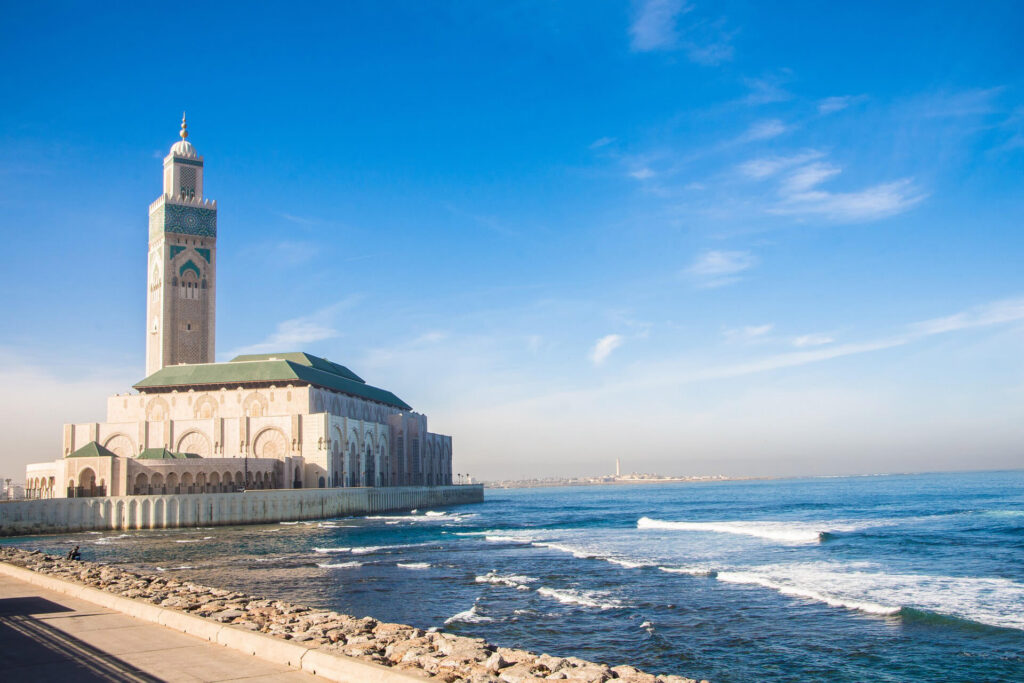
This is impressively reflected even in the modern Hassan II. Mosque in the famous coastal city of Casablanca. The Hassan II. Mosque is one of the largest religious edifices in the world—a monument of stone, light, and water. It unites tradition with technical sophistication, faith with the future, and Moroccan craftsmanship with global ambition.
History
Designed by the French architect Michel Pinseau. The cornerstone was laid on July 12, 1986 and complete completion was on August 30, 1993. Six thousand traditional Moroccan artisans labored for five years to create the opulent stone and marble floors – richly inlaid with beautiful mosaics – the granite columns, and the carved and painted wooden ceilings.
The cost of the building is estimated to be approximately $400-700 million. A total of 35,000 workers worked on the construction site.
Architectural Features and Designs
The mosque sits partially atop an artificial promontory in the Atlantic Ocean, such that at high tide, the sea surges directly beneath the prayer hall. This constitutes an impressive design element of this magnificent structure.
With a height of nearly 210 meters, it is one of the tallest religious structures in the world. It is equipped at the very top with a laser that projects its beam 19 kilometers in the direction of Mecca.
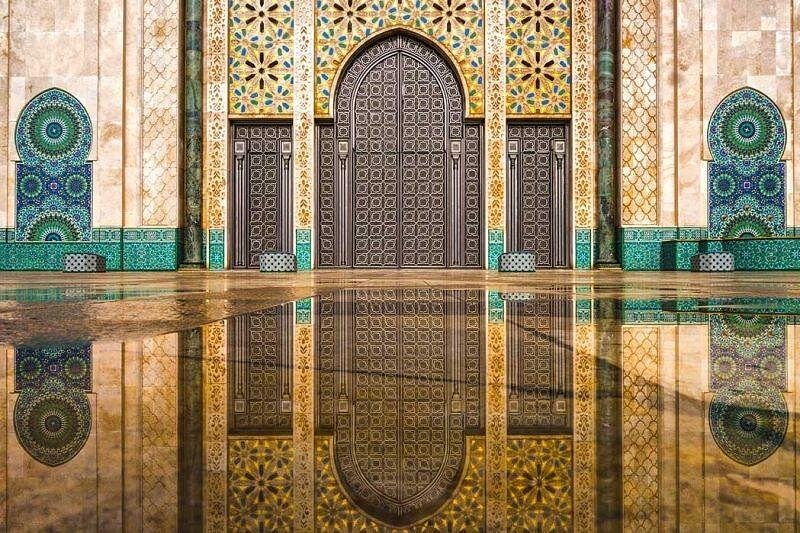
The architecture incorporates classical elements such as horseshoe arches, intricate wood carvings, mosaics, and stucco work. The gigantic roof of the prayer hall can be opened mechanically to allow for open-air prayer in fine weather. The walls are crafted from hand-worked marble.
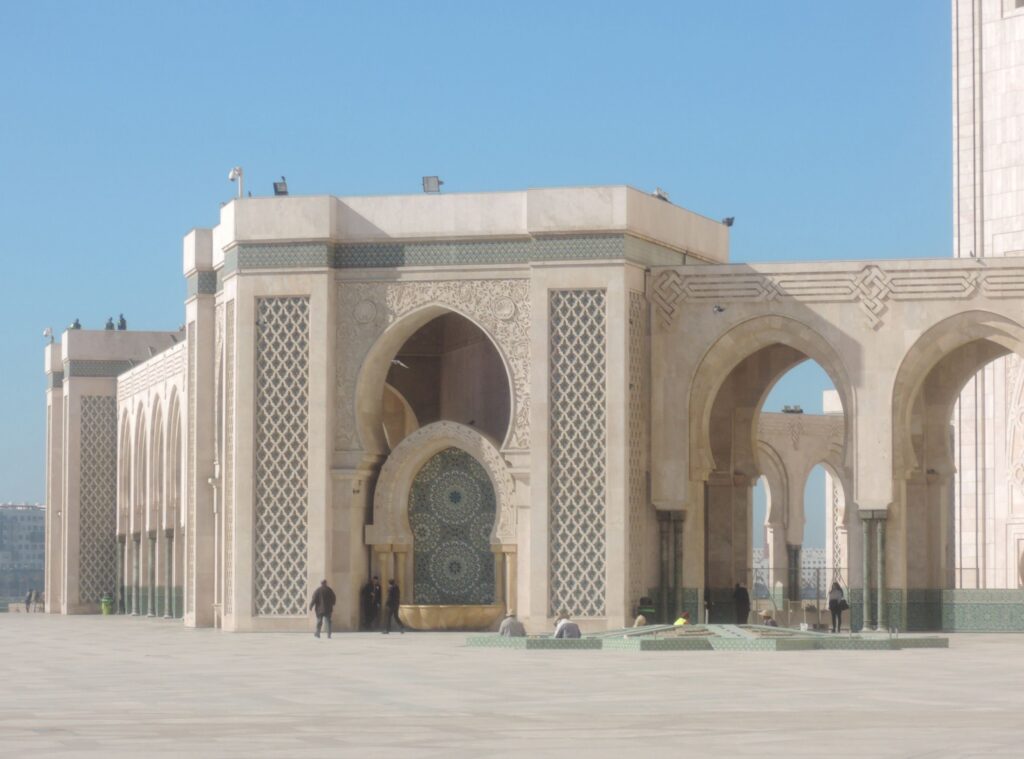
Some of the mosque’s exterior surfaces feature titanium, bronze, and granite finishes. Portions of the facade are adorned with pale blue marble and tiles. A distinctive feature of the mosque is that all structural elements are constructed from reinforced concrete, while all decorations adhere to traditional Moroccan designs.
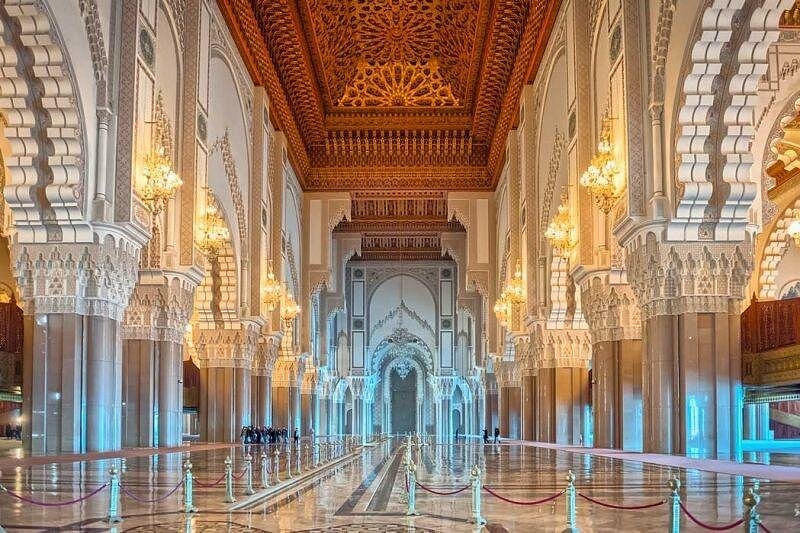
Furthermore, technical features include an automatically opening roof, underfloor heating in the prayer hall, and a green laser beam that points toward Mecca at night.
A National Self-Image Carved in Stone
In Morocco, the Hassan II Mosque stands for more than just religious practice. It is the expression of a national self-conception that looks back upon its history with pride, yet does not shy away from forging new paths.
Traditional craftsmanship meets futuristic architectural concepts. Religious architecture becomes a platform for cultural openness. Thus, the mosque emerges as a symbol of a nation in transition.
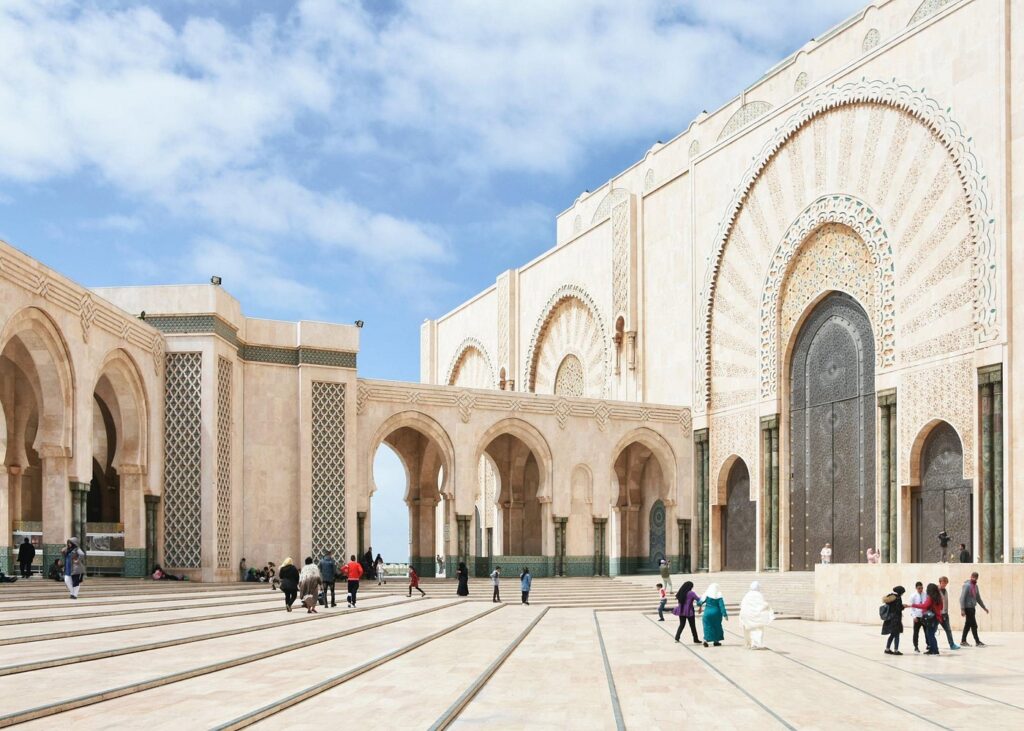
The Hassan II Mosque in Casablanca is an architectural and engineering masterpiece that impressively unites tradition and modernity, spirituality and national identity. It is a place of superlatives that evokes both admiration and criticism and thus remains a fascinating symbol of the Morocco of the present and future. Anyone visiting Casablanca should make a point of experiencing this unique structure.
Leave a Reply