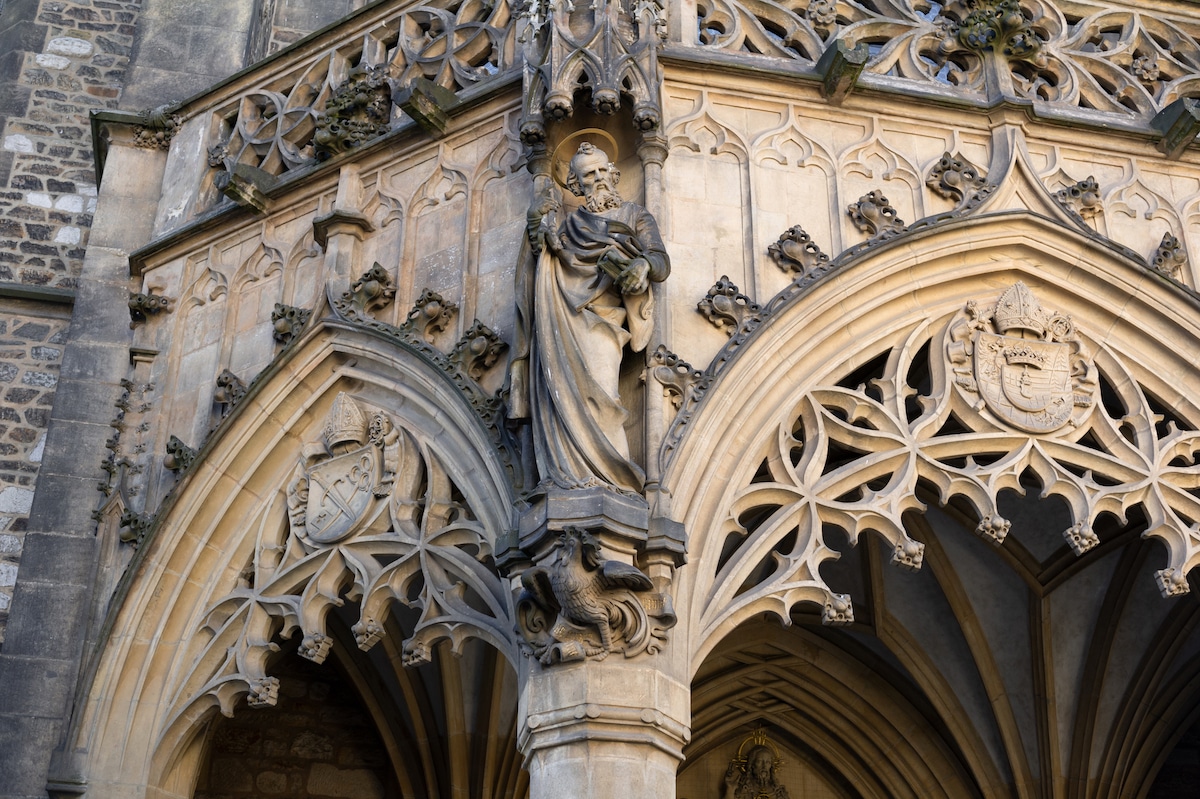
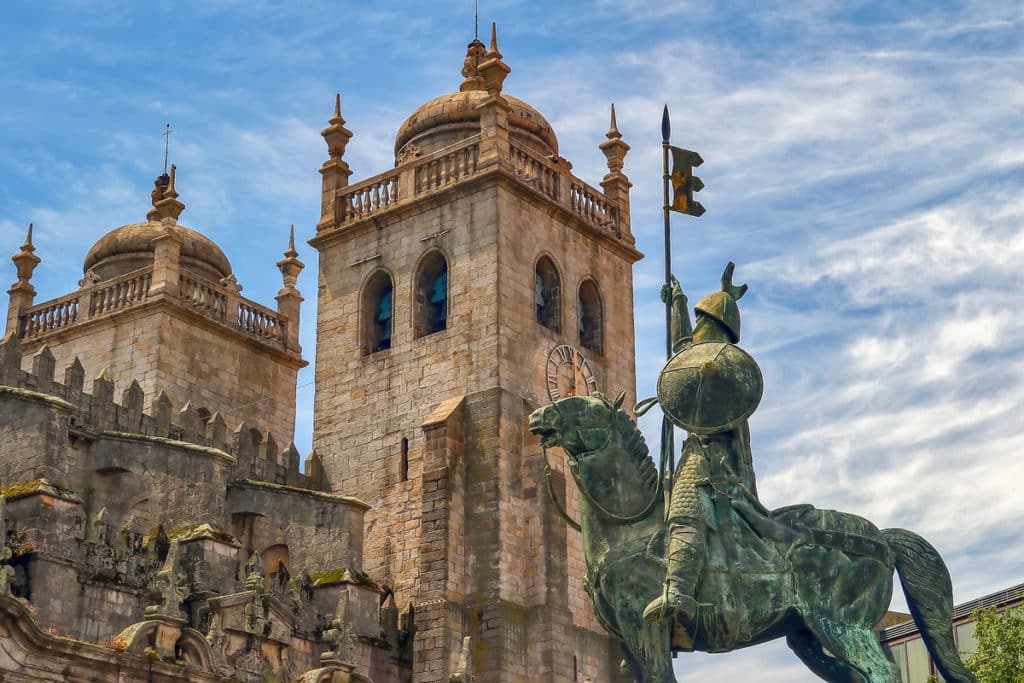
The Porto Cathedral and its cloister are two of Porto’s top attractions and a must-see for anyone visiting the city. The cathedral sits on a square with a historic column marking the spot where criminals were once hanged. This square also offers some of the best panoramic views of Porto, including the Douro River and the famous wine cellars lining the waterfront.
History
The construction of the cathedral in the 12th century, as well as the first ring of Porto’s city walls, is attributed to the first bishop of the castle, D. Hugo.
On the exterior, the cathedral still displays some elements of its original style as a castle church, such as the bell towers. Massive buttresses on the facade surround the original rose window and a portal dating from the 18th century. On the north side facade, an 18th-century Baroque gallery, attributed to Nicolau Nasoni, is particularly noteworthy.
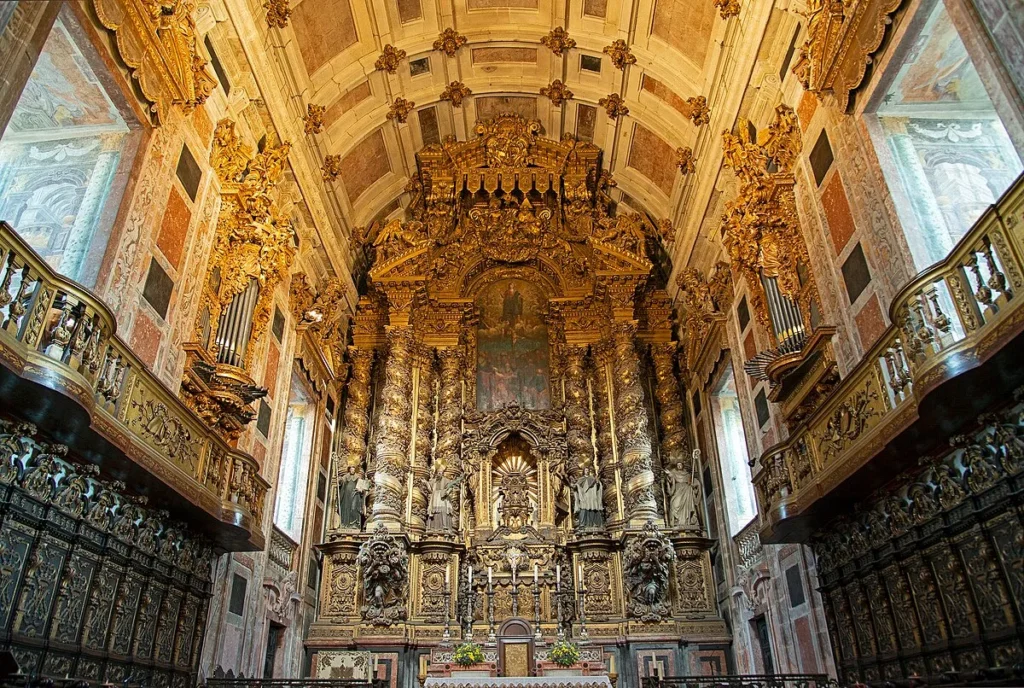
Inside, the main Baroque altar, topped with a magnificent altarpiece, and the altar of the Blessed Sacrament, a precious work of goldsmithing from the 17th and 18th centuries, crafted by goldsmiths from Porto, are especially remarkable.
On the south side of the church, the elegant Gothic cloister opens, adorned with beautiful 18th-century Portuguese tiles. This complex includes the magnificent building of the bishop’s residence, whose construction also dates back to the 12th century, and whose size reflects the first ecclesiastical power over the castle.
The Architectural Features of Catedral do Porto
The architecture of Porto Cathedral (Sé do Porto) is a mixture of Romanesque, Gothic, and Baroque styles, with robust Romanesque walls. The building has a fortress-like appearance with twin towers.
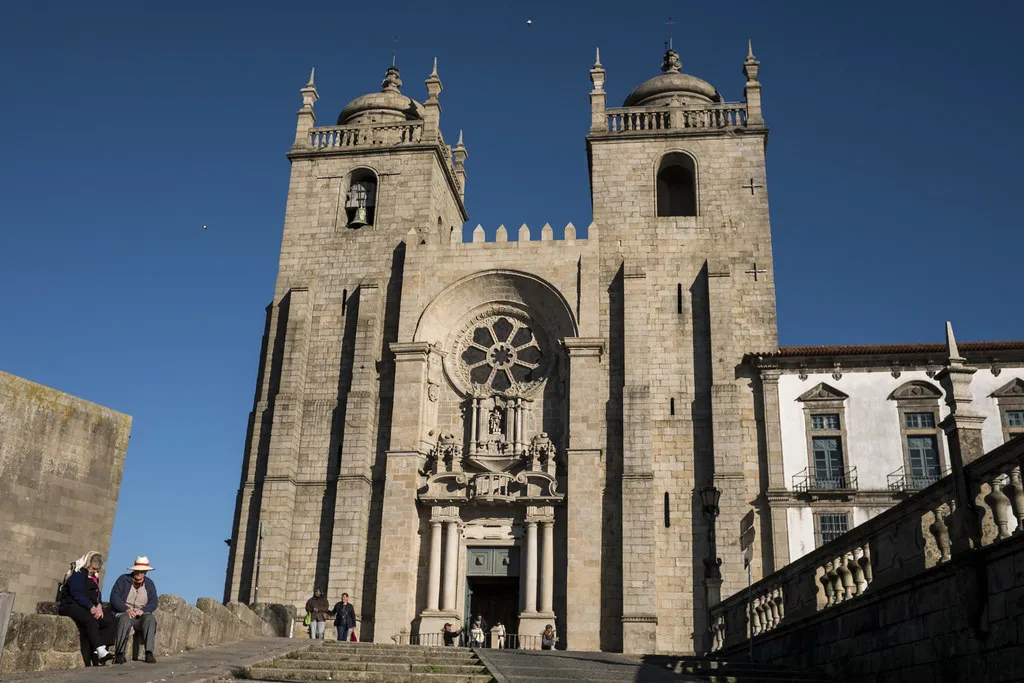
The elements of the church that can be attributed to Romanesque architecture date from the 12th century. The later Gothic elements such as the Gothic cloisters with blue and white azulejo tiles depicting biblical scenes, or the high columns, pointed arches and delicate rib vaults inside, can be dated to the 14th century.

Furthermore, traces of 18th-century Baroque style can also be found in the cathedral: These include a gold-decorated silver altarpiece (1727-1729) by Miguel Francisco da Silva, as well as Baroque frescoes in the sacristy and on the windows. The facade also features Baroque decorations.
Dating back to the 12th century, Gothic elements such as the cloister with azulejos tiles and delicate ribbed vaults, and Baroque embellishments like the magnificent high altar and the sacristy. These styles have merged over the centuries to create a unique building that has evolved from its massive Romanesque base to its Baroque decorations.
Believe me, it is a masterpiece!
Leave a Reply